2026 Vitamins, Minerals, and Supplements Trends

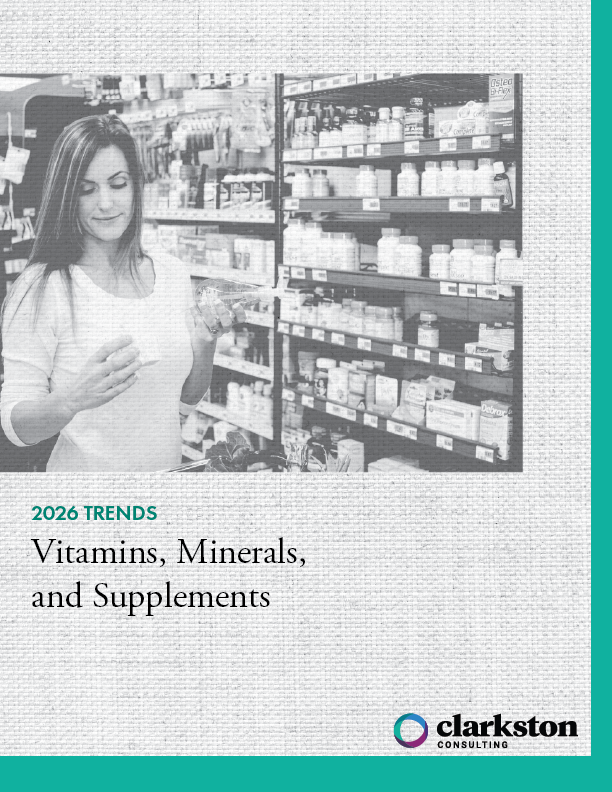
Download the full 2026 Vitamins, Minerals, and Supplements Trends Report here.
This free trends report outlines industry perspectives and expert advice from our team of consumer healthcare consultants. You can view an excerpt of the report below, and if you’d like to discuss any of the trends or other challenges in the vitamins, minerals, and supplements industry, connect with our team today.
Key Vitamins, Minerals, and Supplements Trends
Taken together, these trends showcase a fundamental shift in the way consumers are engaging with supplements and OTC products. Expectations are increasingly shaped by convenience and by how easily products fit into everyday life rather than by traditional category boundaries.
In 2026, successful brands will position supplements at the intersection of wellness and lifestyle. External factors, like the rise of GLP-1 medications and ongoing regulatory uncertainties, are shifting supplement demand toward targeted, functional solutions and bringing credibility to the forefront.
Digital transformation is also becoming a baseline requirement. As OTC products continue moving into direct-to-consumer channels and personalized nutrition becomes more dynamic, brands that invest in strong digital platforms and thoughtful partnerships will be better positioned to remain relevant and competitive.
Clarkston’s consumer healthcare consultants have highlighted the top health and wellness trends that businesses should consider and keep top-of-mind throughout the year:
- Blending of Beauty, Wellness, and Nutrition
- GLP-1 Reshaping Nutrition Demand
- Regulatory Uncertainty Due to Policy Changes
- OTC Products Now Marketed DTC
Trend 1:
Blending of Beauty, Wellness, and Nutrition
The rapid expansion of the women’s health market in 2025 has accelerated the convergence of beauty, wellness, and nutrition. For younger consumers in particular, wellness is no longer viewed as a purely functional purchase. It has become part of how they define their lifestyle and personal identity. A majority of Gen Z consumers say they prioritize a healthy lifestyle over traditional markers of success, contributing to wellness evolving into a gifting category, a form of self-expression, and a premium segment rather than a basic necessity.
In response to this shift, supplement brands are pulling away from clinical design choices and pushing forward with lifestyle branding. Many brands have started redesigning packaging to emphasize color and the product’s benefits. For example, supplement brand Nature’s Way recently evolved their packaging design, creating a brighter, modern design that more prominently highlights each product’s intended effect. As this shift continues into 2026, brands that rely on sterile, pharmaceutical-style designs risk losing relevance with consumers who expect wellness products to fit naturally into everyday life.
In addition to the blending of beauty, wellness, and nutrition, we’ve also seen a premiumization of the wellness sector. Brands like Olly offer premium skincare with “beauty from within” products, supplements that can improve healthy skin, hair, or nails. Products like these have even been placed in beauty stores, with Ulta incorporating wellness shops inside their stores to showcase these products. For brands, this highlights the importance of a deliberate retail strategy, as product placement plays a meaningful role in how shoppers discover brands and how those products are perceived within a broader routine.
Looking ahead, supplement marketing is shifting toward specific outcomes and lived experiences tied to overall quality of life. The line between beauty and wellness will continue to blur, and nutrition brands will need to adjust their marketing approaches to fully capitalize on this convergence.
Trend 2:
GLP-1 Reshaping Nutrition Demand
Rising use of GLP-1 medications is beginning to materially reshape the nutrition and supplement landscape heading into 2026. Among Americans with weight loss goals for the year ahead, 27% plan to use GLP-1 medication. As adoption increases, these treatments are changing not only what consumers eat, but also how they think about supplementation and ongoing health support.
With the rise of GLP-1 usage, it’s redefining what consumers eat, what supplements they buy, and how they engage with health products. Since GLP-1 medication suppresses appetite – so much so that patients may struggle to get their daily intake of the necessary vitamins and minerals through food alone – it increases the need for targeted supplements to help prevent deficiencies.
Multivitamins for a low-calorie diet, vitamin D and calcium blends for bone health, and iron and B-complex supplements for energy support are all areas that can be beneficial to GLP-1 users. The medication can also cause digestive issues, increasing the need for digestive aids, fiber blends, and prebiotics and probiotics to support digestion.
As GLP-1 adoption continues to grow, supplements are increasingly positioned as essential nutritional support rather than optional enhancements. This shift creates new opportunities for brands, so supplement companies will have to adjust formulation, education, or messaging to responsibly meet the needs of GLP-1 users moving forward.
Continue reading by downloading the full report below.
Download the Full 2026 Vitamins, Minerals, and Supplements Trends Report Here
Read last year’s Supplement and Nutrition Industry Trends Report here.
Subscribe to Clarkston's Insights
Contributions from Natalie Pollock