Setting the Foundation for SAP S/4HANA in Fashion Retail: Why Phase Zero Matters

An SAP S/4HANA transformation can be one of the most significant technology investments a fashion retailer will make. Before detailed discovery and design begin, however, several fundamental decisions will shape how the program is scoped and funded, with implications for its timeline and success.
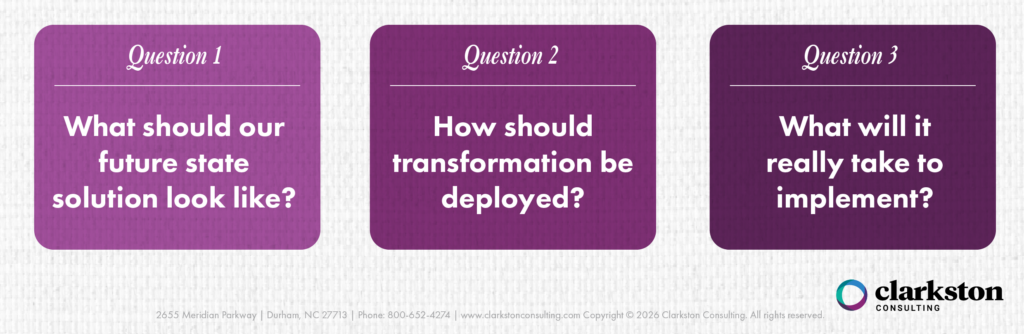
These questions are particularly important in fashion retail, where SAP is just one component of a broader technology ecosystem. Conducting Phase Zero gives retailers an opportunity to establish the transformation’s direction before implementation begins. The work helps define scope and a realistic roadmap, supported by a comprehensive investment estimate.
SAP S/4HANA in Fashion Retail
1. What Should the Future-State Solution Look Like?
Before estimating how long an SAP S/4HANA transformation will take or what it will cost, retailers first need to understand what they are building. For fashion retailers, this means looking at SAP alongside their other technology platforms.
The future-state architecture should define which capabilities SAP S/4HANA will own and which will remain in adjacent platforms. It should also establish how processes and data will flow across the ecosystem and identify opportunities to simplify or standardize the environment.
This can be a substantial exercise in a fashion environment. The assessment may span product lifecycle management and merchandising, extending beyond SAP to the platforms that support those capabilities. It should also consider how demand planning connects with sourcing, including supplier collaboration. Requirements across order management and eCommerce introduce further considerations, as do distribution and store operations. Historical data and reporting needs should inform the assessment alongside plans for retiring legacy applications.
Phase Zero should confirm capability ownership and integration requirements in enough detail to inform investment decisions without moving into the detailed process design that will follow during implementation.
Defining the future state also requires agreement on how the organization will approach standardization. Guiding principles can establish standard SAP capabilities as the default while preserving differentiation where it creates business value. Teams should also challenge inherited customizations and interfaces rather than automatically carrying them forward. These principles can then provide a consistent lens for architecture and design decisions during implementation.
SAP’s fashion transformation guidance emphasizes standard processes and clean data, with extensions and integrations for differentiated requirements. These choices are especially important for retailers transitioning from SAP Apparel and Footwear (AFS). SAP confirms that the move to SAP S/4HANA for fashion and vertical business requires a new implementation rather than an in-place conversion because of changes to data structures and processes.
Outputs should include an agreed future-state architecture and capability map, supported by an integration strategy and standardization principles. An SAP software bill of materials should also identify the products needed to support that direction.
2. What is the Right Deployment Approach?
Once the future state is defined, retailers need to determine how to implement it. There isn’t a single deployment strategy that is right for every retailer. A retailer prioritizing speed may choose a different approach from one that needs to introduce change gradually to protect business continuity. Phase Zero provides the opportunity to evaluate these types of tradeoffs before the project timeline becomes fixed.
Three dimensions are particularly important: scope, deployment, and speed.
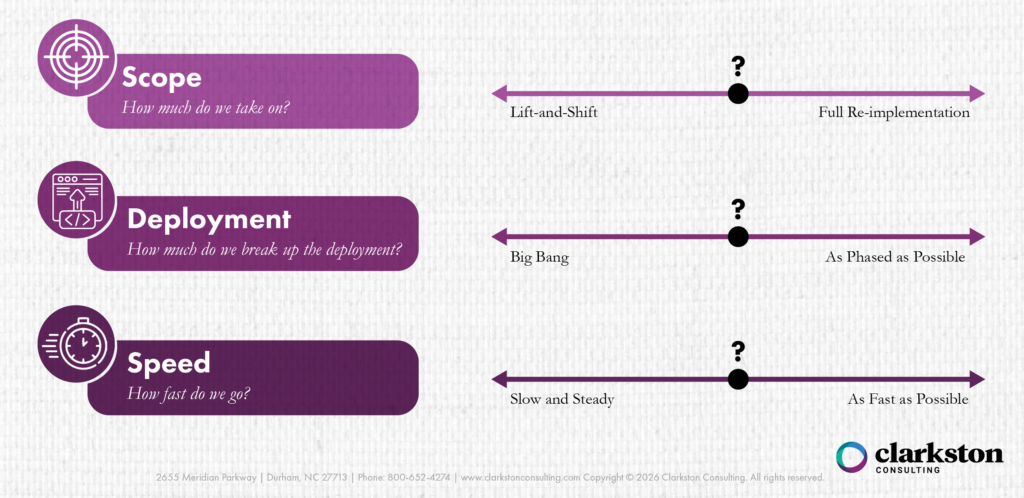
Fashion retailers may structure rollout waves by region or brand, separate deployments by channel or function. These options should be assessed against consistent criteria, with business continuity and risk guiding the evaluation. Implementation effort needs to be weighed against organizational readiness, while cost should be considered alongside time to value. Dependencies and interim-state complexity can further influence which approach is most practical.
The deployment strategy should be determined before the timeline. Fashion retailers should first identify a logical rollout sequence, then assess when deployments can realistically occur. Seasonal calendars and peak selling periods can constrain deployment windows, while inventory movements and financial periods may further limit when changes can occur. The deployment strategy and timing roadmap should also account for dependent technology initiatives.
A phased approach may reduce the change introduced at once, but it can also create interim integrations and data flows that need to be supported until the transformation is complete. Temporary financial processes and other dependencies can add to that effort. By the end of Phase Zero, leadership should understand the viable deployment alternatives and their tradeoffs. The roadmap should outline major rollout waves and dependencies, with milestones that reflect business constraints and potential risks.
3. What Will it Really Take to Implement?
With the future state and deployment strategy defined, a fashion retailer can more realistically estimate the broader transformation investment. That estimate should extend beyond SAP software and implementation services to account for changes in adjacent platforms and the internal staffing needed to support the program. Data preparation requires funding as well, alongside testing and training, and organizational change management support should also be reflected in the estimate.
SAP’s S/4HANA business-case guidance takes a similarly broad view, recommending that companies weigh total cost of ownership against business value. It also addresses time to value and risk, with the target-state architecture and deployment roadmap helping define the proposed path.
Understanding what the implementation will take also means understanding whether the organization is prepared to execute it. Phase Zero should outline business and IT participation, including where backfills may be needed. The resource and governance model should also account for knowledge transfer and the organization’s capacity for change.
Data readiness should be assessed early enough to identify issues that could materially affect the estimate or solution design. In fashion retail, this may include examining article and product hierarchies in the context of seasonality. Inventory data also needs review, as do customer and vendor masters. Pricing requirements should be considered alongside finance data and controls, with the assessment extending to other critical master and transactional data. The intent is to find potential data “landmines” while there’s still time to address them.
The organizational change assessment should establish the scale of change and whether leadership is aligned, while identifying the populations most affected and the staffing needed to support adoption. Together, these inputs support an investment estimate with explicit assumptions and risks; they also help leaders understand the resources required to execute the program.
Phase Zero Sets the Stage for Implementation
Phase Zero brings consequential decisions forward while retailers still have the flexibility to shape the transformation. Its value depends partly on knowing which decisions need to be made early and which require detailed implementation work. With an agreed direction and a realistic roadmap grounded in the required investment, fashion retailers can begin implementation with fewer fundamental questions unresolved and greater confidence that the organization is investing in the right transformation.
Learn how Clarkston’s SAP consulting services for retail can help you define the right path for your transformation.