Retail Store Experience in 2026: What Makes Physical Stores Worth Visiting

As ordering online becomes more accessible than ever, physical stores must develop strategies to differentiate themselves and bring shoppers through the door. Despite growth in eCommerce, it only represents around 17% of total retail sales, leaving physical retail as the majority. However, increases in online shopping accompanied by AI tools could prompt over 40,000 store closures in the next five years.
With these shifts in mind, it’s critical for retailers to invest in store layouts, services, events, and tools that make physical visits worthwhile. The convenience of digital retail has raised expectations for speed and personalization across all channels. Customers are now more selective about store visits and often arrive with a specific goal in mind. This pressure is guiding retailers to define a clear role for their stores beyond fulfillment and inventory holding.
Key differentiators include speed, location, assortment, and price. In 2026, retailers must find innovative methods to build loyalty with shoppers through engaging in-store experiences that cannot be replicated online. Large chains like Walmart and Target are better positioned to adapt, while small, independent retailers may face challenges as retail evolves.
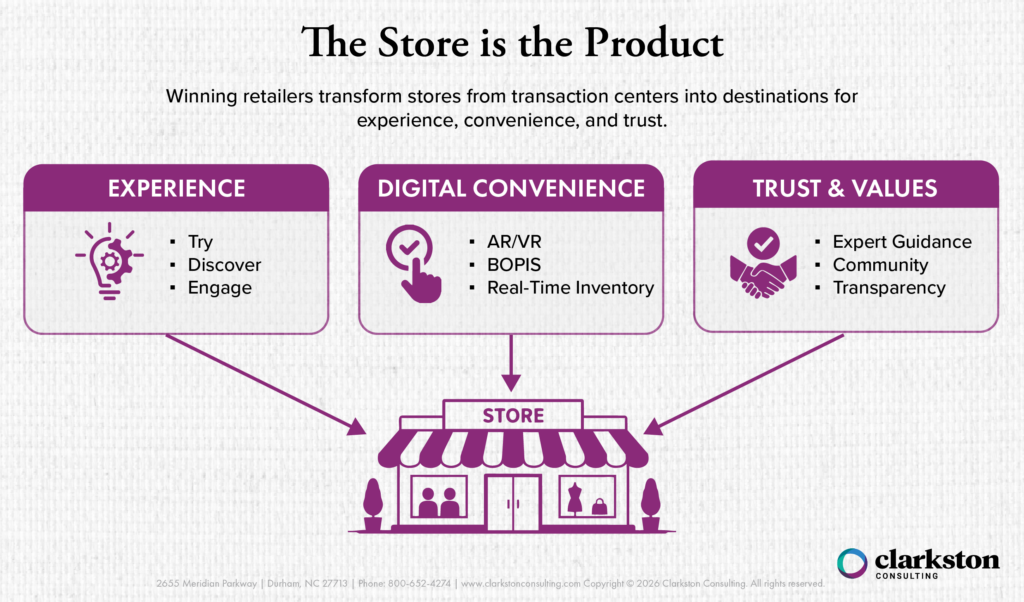
Delivering Tangible Value Through Experience
Experiential retail, including product interaction and events, is a main driver of in-store traffic. These offerings guide customers to discover new products in a way that is more memorable than online environments. For categories like apparel, beauty, and electronics, touch and trial remain important before purchasing.
Nike’s outlet in SoHo recently expanded to allow shoppers to get active using their products. The brand’s flagship location boasts a basketball half-court with adjustable hoops and digital video screens and a treadmill in front of a jumbotron to simulate outdoor runs, among other areas for personalization. Nike builds connections at its activity center with in-store assistants, who can recommend sneakers based on a customer’s running style on the treadmill.
Store environments, like Nike’s dynamic and motivating five-story location, meaningfully influence shopper behavior. In the right conditions, the store itself becomes part of the value proposition, creating an enjoyable experience even before a purchase is made. Layout and sensory cues can affect time spent in the store by making it easy to find desired items and exciting to discover new ones.
Retailers are also investing in store design to improve engagement and convenience. Target is a strong example of this focus, boasting over 130 remodels and 30 new stores in 2026. These remodels seek to make the shopping experience more inspiring, with engaging merchandise displays that demonstrate elevated style. New signage and modernized restrooms and nursing spaces help transform routine store visits into seamless, interactive shopping.
Ultimately, retailers should create store experiences that connect excitement and energy to their products. Aligning assortment positioning with brand image and audience is crucial for long-term success.
Integrating Digital Capabilities into the Store Journey
In 2026, customers expect seamless movement between digital and physical channels. Services like Buy Now, Pay Later (BNPL) and real-time inventory visibility are now standard expectations. Mobile device usage in stores is frequent, with many shoppers using phones to compare prices and access product information while shopping.
As a result, retailers are continuously embedding new digital tools into stores, from self-checkout and digital kiosks to app-based navigation. For instance, Sephora is leveraging augmented reality (AR) tools like its “Virtual Artist,” which enables customers to try on makeup virtually using its mobile app or in-store devices.
This technology promotes customer confidence in purchases and reduces returns. It’s especially useful in beauty because product fit factors like shade and tone are key to satisfaction. It also supports Buy Online, Pickup In-Store (BOPIS) by encouraging shoppers to reserve products to try in-person.
Digital capabilities enable retailers to make data-backed decisions regarding personalization and targeted offers. Combining customization based on shopper needs with ease of purchasing is necessary in today’s retail environment.
Reflecting Customer Values and Building Trust
Customers are increasingly influenced by sustainability and ethical considerations, and retailers must understand these values to ensure alignment with their products. The majority of shoppers report a willingness to change purchasing behavior based on environmental impact, indicating that these factors are moving to the forefront of the decision-making process.
Transparency around sourcing and production builds trust among a retailer’s audience, and in-store staff play a critical role in shaping customer experience and satisfaction. For example, Walmart created a “Beauty Expert” role paired with its Beauty 2.0 redesign that places these offerings closer to the front of the store. The brand aims to make the beauty experience more personal and accessible through customer interaction. Experts will receive ongoing monthly and quarterly training on products and will support store events to determine what engagements resonate with shoppers.
Walmart’s example reveals that stores are evolving into community spaces through events and localized engagement. Trust is reinforced through consistency between brand promise and in-store execution.
Costco’s membership program provides an advantage in this area despite today’s challenging retail environment. Its app offerings make the in-person shopping experience smoother by bridging the gap between online and physical stores. Costco is currently piloting scan-and-go stations to reduce the average transaction time to about 8 seconds. Monitoring member feedback helps the retailer to continue supporting loyal customers as volume grows.
Looking Ahead
In 2026, the role of the store is evolving from a transaction center to a hub of experience and connection. Customers expect stores to deliver clear value that complements digital convenience, and retailers must innovate to create new components that enrich the customer journey. Digital integration and services aligned with customer values strengthen trust and define whether a store is worth visiting. To get started, contact Clarkston’s retail experts today.
Subscribe to Clarkston's Insights
Contributions from Hannah Yang
AI-assisted: A human led the content and final approval of this piece, with AI used to support ideation, drafting, editing, summarization, or repurposing.